
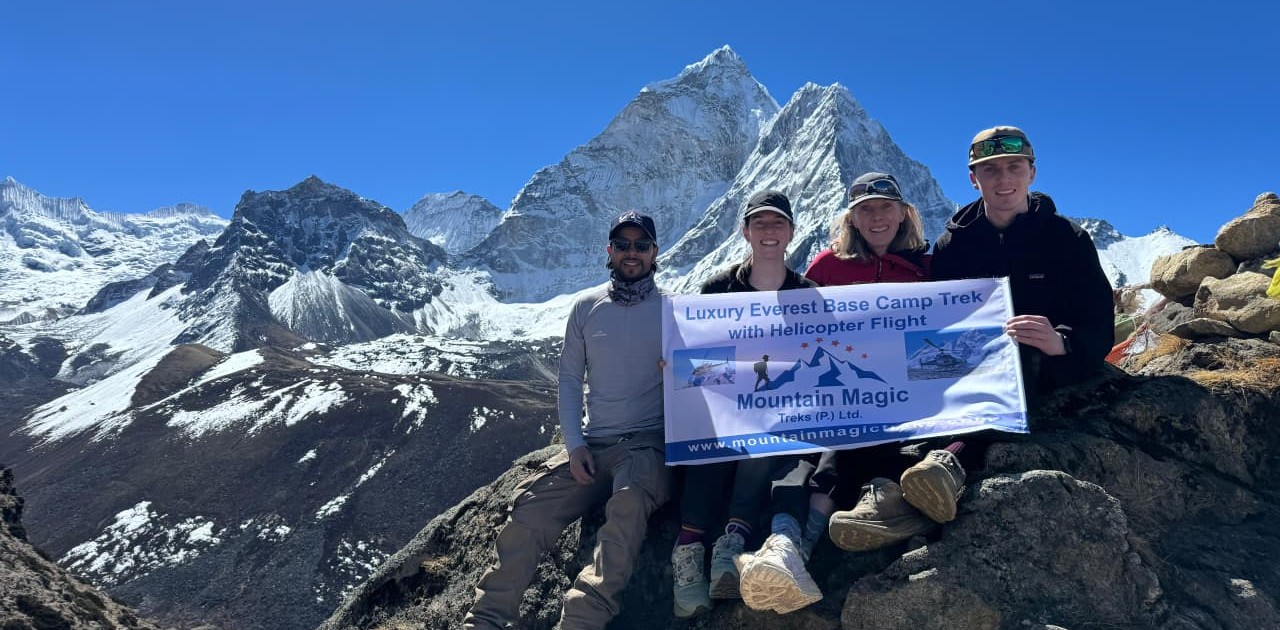
Everest has a way of making people curious. You may have seen pictures of snowy peaks, narrow mountain trails, and colorful prayer flags, but seeing the region in person is completely different. The sound of a river beside the trail, the quiet of a mountain village, and the sight of Everest in the distance stay with you.
The Everest Base Camp Trek with helicopter return is a practical choice for travelers who want to experience these moments without spending extra days walking back after reaching the high Himalayas. The trekking route takes you through the Khumbu region before a helicopter provides the return journey, depending on weather and safe flight conditions.
If this is your first Everest adventure, knowing what to expect can make the trip much easier.
Start With a Realistic Plan
The first mistake many new trekkers make is thinking about Everest as one simple climb.
It is not.
You will spend several days walking through changing landscapes while your body adjusts to increasing altitude.
The Goal Is Steady Progress
You do not need to walk quickly.
In fact, trying to move too fast can make the higher sections much harder.
A comfortable pace helps you save energy for later in the day and for the higher parts of the route.
Your guide can help you find a rhythm that works for you.
Get Comfortable With Long Walking Days
You may walk for several hours on many days.
The trail is not always steep, but it is rarely flat for long.
You will deal with stone steps, uneven paths, uphill sections, and downhill stretches.
Train Before Nepal
Start preparing before your trip.
Regular walking is a simple place to begin. Gradually make your walks longer and include hills or stairs.
You can also add basic leg exercises such as step-ups and squats.
The aim is not to become extremely strong. It is to make long days on your feet feel normal.
Let Lukla Introduce You to the Mountains
Lukla is where the walking adventure begins.
After the flight from Kathmandu, the atmosphere changes quickly. Mountain slopes surround the town, and the trail begins near the airstrip.
The first walking section toward Phakding gives you time to settle into the journey.
Enjoy the Lower Trail
The lower route has green hills, forests, rivers, and small settlements.
It may feel easier than the later sections, but do not use that as a reason to walk too fast.
Your body is already beginning the adjustment process.
Enjoy the scenery and save some energy for the days ahead.
Namche Is an Important Turning Point
The trail toward Namche Bazaar brings more climbing.
You cross suspension bridges and follow the Dudh Koshi River before making the final climb toward the town.
Once you reach Namche, the feeling of being deep in the Himalayas becomes much stronger.
Use Your Rest Day Properly
Acclimatization at Namche is an important part of the Everest Base Camp Trek with helicopter return.
You can take a short hike, explore the town, or simply rest.
The idea is to spend time at altitude without moving significantly higher.
This gives your body more time to adapt.
Pay Attention to Your Body
Altitude affects people differently.
One person may feel fine while another may develop a headache or unusual tiredness.
Do not assume your fitness level protects you from altitude problems.
Experience the Culture Along the Trail
The Everest region is home to Sherpa communities with deep Buddhist traditions.
As you walk, you may see prayer flags, mani walls, prayer wheels, monasteries, and other signs of local culture.
Visit With Respect
Do not treat villages and religious sites as photo sets.
Be respectful when taking pictures of people.
If you enter a religious site, follow local instructions and behave quietly.
These simple habits help you connect with the region rather than simply passing through it.
Tengboche Offers a Quiet Break
Tengboche is known for its monastery and mountain views.
The location feels peaceful, especially after a long day of walking.
It is worth slowing down here.
Look at the Small Details
The best memories are not always the biggest ones.
A cup of tea after a cold walk.
A conversation with another trekker.
Prayer flags moving in the wind.
A clear view of a mountain between the clouds.
These small moments give the journey its character.
Dingboche Means Higher Ground
After Tengboche, the trail continues toward Dingboche.
The landscape changes as you climb.
There are fewer trees, the valley becomes more open, and the mountains appear larger.
The air is also thinner.
The Route Gets Tougher Near Lobuche
The trail beyond Dingboche becomes more rugged.
You will encounter rocky terrain and colder conditions as you move toward Lobuche.
At this elevation, a short uphill section can feel much harder than expected.
Keep Your Backpack Organized
You should not have to search through everything while walking.
Keep frequently used items near the top or in easy-access pockets.
Useful items include:
- Water
- Sunglasses
- Sunscreen
- Snacks
- Gloves
- Camera
- Extra layer
Good organization saves time and keeps small problems from becoming frustrating ones.
Gorakshep Is Close to the Goal
Gorakshep is one of the final stops before Everest Base Camp.
The environment feels raw and remote.
From here, you head toward Base Camp across rocky terrain near the Khumbu Glacier.
Remember Why You Started
The high-altitude section can be tiring.
This is when it helps to focus on one section at a time rather than thinking about the entire distance.
Walk.
Rest.
Drink.
Repeat.
Eventually, Base Camp appears ahead.
End the Adventure From the Air
The final advantage of the Everest Base Camp Trek with helicopter return comes after the high-altitude trekking section.
Instead of walking back through the same valleys for several days, you can return by helicopter, subject to weather and flight conditions.
Watch the Mountains Shrink Below You
The helicopter gives you a view that you could never get from the trail.
The paths you walked become tiny lines.
Villages look small against enormous mountains.
Valleys stretch much farther than they seemed from the ground.
It is a powerful way to finish the journey.
Keep a Backup Plan
Mountain weather can change quickly.
A helicopter flight may be delayed because of clouds, wind, visibility, or other safety concerns.
Leave Space in Your Schedule
Avoid planning an important flight immediately after your expected return.
Giving yourself extra time can make a weather delay much easier to handle.
Flexibility is part of smart Everest planning.
Final Thoughts
The Everest Base Camp Trek with helicopter return is not only about saving time. It is about choosing how you want to experience the Everest region.
You walk through villages, forests, valleys, and high mountain terrain. You learn about local culture and give your body time to adjust to altitude. You reach Everest Base Camp and have the chance to climb Kala Patthar.
Then the trail ends in a completely different way.
Instead of retracing your steps, you rise above the Himalayas by helicopter.
For a first-time traveler, that combination can create a rewarding balance of challenge, discovery, and convenience. Prepare properly, respect the mountains, and allow yourself enough time to enjoy every stage of the journey.
Frequently Asked Questions
Is the Everest Base Camp Trek with helicopter return difficult?
Yes. The trek includes long walking days and high elevations, so reasonable fitness and proper acclimatization are important.
How should beginners train?
Regular walking, hill training, stair climbing, and basic leg exercises can help prepare your body for the trail.
Why is acclimatization important?
It gives your body time to adjust as you move into higher elevations and can make the trekking experience safer and more manageable.
What is the highest point of the route?
Kala Patthar is approximately 5,545 meters above sea level.
Can the helicopter return be affected by weather?
Yes. Helicopter operations depend on suitable visibility, weather, and safe flying conditions.
Should I allow extra time after the trek?
Yes. A flexible schedule is wise because mountain flights may be delayed or changed when conditions are unsuitable.